How Shared Studios Help Makers Teach One Another
Learn how shared studio teaching helps makers pass on practical skills through clear demonstrations, respectful feedback, and useful notes for future work.
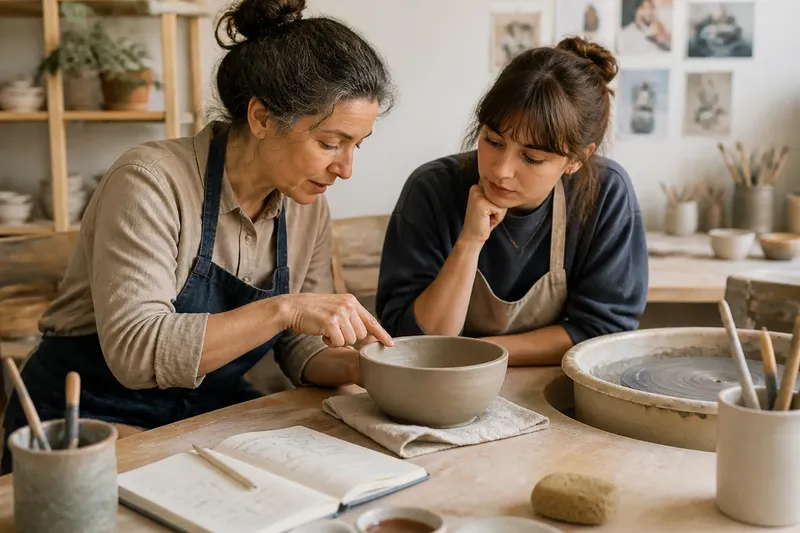
A ceramicist sets a damp bowl beside the wheel, and a newer maker notices the rim dipping on one side. In a shared studio, that moment can become a useful lesson: the maker explains what they were watching, the learner sees the cue, and both return to their own work. Shared studio teaching works best when advice stays close to the material and the person making it.
What makes a studio exchange useful?
A useful exchange connects an observable detail to a choice. “The bowl is uneven” names a result; “the rim drops where your hand slowed” points to something the learner can inspect. From there, the maker can explain what they would try next without taking over the work.
Specific language also makes room for different strengths. One person may notice pressure, another may spot a change in sound or texture. Rather than assuming everyone reads a material the same way, a studio can treat those observations as useful information to compare.
- If a learner can point to the exact area that concerns them, then discuss that area; if they cannot, ask them to turn the piece or view it from another angle before offering advice.
- If a tool’s purpose is clear to the person borrowing it, then let them use it according to the studio’s norms; if not, show its intended use or choose a simpler tool.
- If a maker asks for feedback on a specific decision, then respond to that decision; if they are concentrating or have not invited comments, ask before interrupting.
- If a demonstration gives everyone a clear view of the material and hand movement, then continue at that pace; if people cannot see the key action, change the viewing position or repeat it more slowly.
- If a shared note names both the action and the cue to watch for, then keep it with the project materials; if it records only a vague result, add the missing context before relying on it later.
- If a suggestion improves one part of a piece but conflicts with the maker’s aim, then discuss the tradeoff and let the maker choose; if the aim is unclear, ask what quality they want to preserve.
How can a demonstration show the judgment behind a gesture?
A demonstration can make a movement visible, but the movement alone may not explain why it works. A printmaker rolling ink onto a plate, for instance, can point out the texture they are checking and describe what would prompt them to pause. The learner then has a cue to look for, not just a motion to copy.
Keep the explanation tied to what is happening in front of you. A teacher might say, “I’m slowing down because the edge is beginning to catch,” then show the spot. That is easier to apply than a broad instruction such as “be careful,” because the learner can connect the words to a visible change.
How should feedback respect the maker’s ownership?
Ask before correcting, and make suggestions rather than verdicts. “Would you like an idea for keeping that seam flat?” leaves the maker free to decline. If they welcome input, describe the feature you noticed and the option you would consider; they still decide whether it serves the work.
That boundary matters in a busy room, where concentration and shared materials both deserve care. Before borrowing a jig or tool, check how it should be used and returned. Before handling another person’s piece, get permission. These simple habits keep collaboration from turning into an unwanted intervention.
What should shared studio notes preserve?
A photo, voice note, or brief written record can help someone revisit a process after the demonstration ends. Useful notes identify the material, the order of actions, and the cue that shaped a decision. A short caption beside a photo can be more helpful than a collection of images with no explanation.
For example, a group working on a woven sample could photograph the loom setup, write down the thread sequence, and add a note about where tension began to change. If someone later gets a different result, the record offers a starting point for discussion—not a rule that every material or maker must behave the same way.
What questions do makers ask about shared studio teaching?
Can a beginner learn a craft by watching?
Watching can reveal hand position, timing, and how a material responds, but it may not show why the maker chose a particular action. Pair a demonstration with a brief explanation, then let the learner try the process and notice what changes.
What is a useful question to ask an experienced maker?
Ask about a choice you can see: what they are checking, why they paused, or what would make them change their approach. A focused question gives the maker room to explain one decision without asking for a complete lesson in their craft.
How can a shared studio welcome different skill levels?
Make demonstrations voluntary, explain local tool-sharing habits, and avoid treating unfamiliar terms as obvious. Experienced makers can share context, while newer members can point out where a process or instruction needs clarification.
Can videos and notes replace hands-on teaching?
They can preserve a sequence or remind someone what to watch for, but they cannot respond to every change in a material or answer a learner’s immediate question. Use them as references alongside conversation and practice.
How does shared studio teaching work in practice?
Imagine a beginner named Lena bringing a small notebook cover to a shared bookbinding table. The cover shifts as she sews, and she wants the spine to stay aligned. A nearby binder asks permission to offer an idea, then points to the cover’s movement and shows how they align the pieces before tightening the thread. Lena tries that adjustment on her next stitch. The visible result is whether the spine stays straighter; if it does, she has a method to continue, and if it still shifts, she and the binder can inspect the next point of movement rather than assume the same adjustment solved it.
That is the practical value of shared studio teaching: the learner keeps ownership, the advice stays connected to a visible choice, and the next action follows from what the work actually shows. To make shared studio teaching more useful, leave room for the maker to compare the suggestion with their own aim—and to carry the lesson into the next piece.