Ten Minutes Often or One Long Session?
Compare short, frequent practice with longer sessions to choose a rhythm that makes restarting easier and suits the focus your creative task needs.
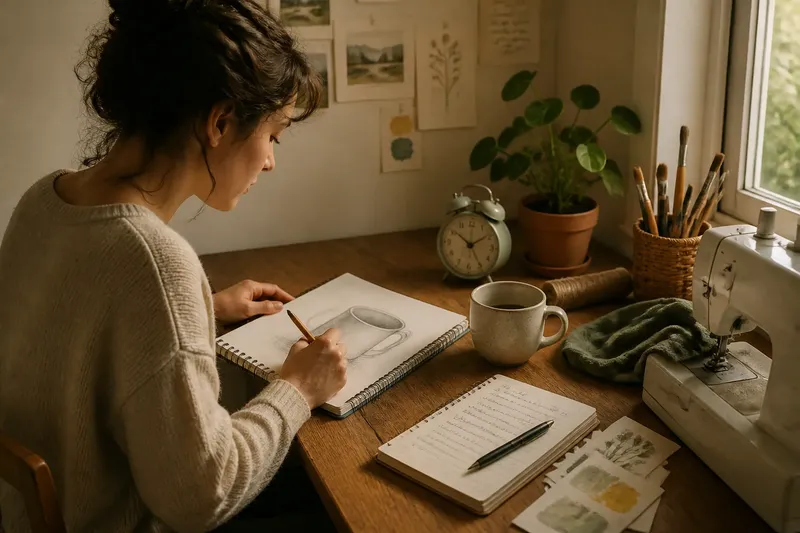
You open your sketchbook after dinner, shade one corner of a mug, then close it when the kettle whistles. The next evening, the page is waiting. For a different project, though, ten minutes might barely be enough to unpack a sewing machine or remember where a complicated melody turns. Choosing a practice rhythm is less about finding one ideal duration than matching the session to the work and to the way you return.
Short, frequent practice can make beginning feel familiar and lower the cost of fitting a skill into an ordinary day. Longer sessions can give concentration room to deepen and allow a task to unfold without constant setup. A hybrid rhythm can borrow from both. Each has a different strength, and each can frustrate you when it clashes with the work in front of you.
What does a short, frequent practice rhythm offer?
Brief sessions are especially useful when the main challenge is getting started. A small, repeatable appointment gives you a clear doorway into a skill: open the notebook, play a phrase, make a few marks, or revise one paragraph. The session does not need to produce a finished piece. It needs to make the next return feel recognizable.
That familiarity can help with skills built through repeated attention to small details. A musician might revisit a tricky transition. Someone learning to draw could compare a few quick studies of the same object. A writer might reshape one sentence or collect observations for a scene. These are tasks with a clear local focus, so a short stretch can still feel complete.
Frequent contact also gives you more chances to notice what is changing. A sound that felt awkward last time may feel less foreign; a pencil grip may need less conscious thought. Treat those observations as clues, not a verdict on your talent. One brief session can be uneven and still make the next attempt easier to enter.
The tradeoff is that each return may require a little reorientation. If the work depends on several materials, a complicated setup, or a long chain of decisions, a small window can vanish before you reach the interesting part. The session can also feel cramped if you spend it watching the clock rather than paying attention.
When can a longer session help you go further?
A longer block suits work that needs a runway. Sewing a garment, arranging a piece of music, building a small clay form, or drafting a connected scene may involve setup, exploration, and adjustments before a satisfying stopping point appears. With more room, you can move through those phases in one sitting instead of reconstructing your train of thought each time.
Longer practice may also help when you are learning to hold several parts of a task in mind. A painter can compare colors across a canvas; a dancer can connect transitions rather than rehearse isolated gestures; a writer can follow how one scene changes the next. Concentration does not switch on instantly, and an open block gives you room to settle into a problem without demanding that every minute be immediately productive.
But a long session is not automatically focused. Fatigue, interruptions, or uncertainty about what to work on can turn an open afternoon into repeated starts. It can also make practice feel like a major event, easy to postpone until a mythical day with no competing demands. If you finish depleted, you may be less inclined to return.
Long sessions are often a better fit when you can identify a useful stopping point before you begin. That might be a rough composition with its main shapes placed, a passage revised through to the end, or a clay piece brought to a stage where it can safely wait. A visible endpoint helps the session feel purposeful without requiring a polished result.
Could a hybrid rhythm suit work with two different tempos?
Some creative projects contain both small repeatable skills and tasks that need extended attention. A hybrid rhythm gives each kind of work its own scale. You might use short sessions to practice a chord change, gather reference images, or make thumbnail sketches, then reserve a longer block for arranging the full song, selecting a composition, or revising the larger piece.
This approach is useful when your available time varies, or when the project has a clear distinction between preparation and making. The brief sessions keep you connected while the longer session handles the work that benefits from continuity. It also gives you something specific to do when you have only a small opening, rather than treating that opening as useless.
Hybrid does not mean that every task must be divided into small and large versions. Keep the distinction practical: which parts can stand alone, and which need uninterrupted attention? If a short session repeatedly ends just as you begin to understand the problem, it may belong in the longer block. If a long block is mostly spent repeating a compact exercise, the shorter rhythm may be enough.
Say you are learning to make linocut prints and have a narrow table that takes time to clear. Imagine using brief sessions away from the table to sketch shapes and decide which forms read clearly, then setting aside one longer stretch to prepare the block and work through the carving. The expected observable result is that your small studies help define the design before you commit to the slower, more involved part of making it.
How should you choose a practice rhythm?
Start with the task, not an abstract ideal about discipline. Ask what a useful session would actually contain. If the answer is one clear exercise, a short rhythm may fit. If it involves setting up, exploring alternatives, and reaching a natural pause, make room for a longer block. If the project includes both, use a hybrid without forcing every part into one schedule.
- Notice the setup: If materials are ready and the task is easy to enter, brief sessions may work well. If setup takes significant attention, consider protecting a longer window.
- Look for a natural stopping point: A compact exercise or small revision can close neatly. A complex passage, garment, or composition may need more uninterrupted space.
- Check how concentration develops: If the work becomes clearer after you settle in, allow time for that transition. If focused repetition is the point, shorter returns may be plenty.
- Consider the cost of restarting: If you often forget your next move, leave a note or mark the precise place to resume. If reconstructing context remains the hardest part, try a longer block.
- Match the session to your energy: A demanding task may suit the part of your day when you can concentrate. A lighter exercise may fit a tired evening without requiring a heroic effort.
- Choose a stopping cue: Decide what counts as a useful finish, such as one revised passage or a clearly marked next action. This keeps either rhythm from turning into aimless time.
Think of this as a choice you can revisit, not a permanent declaration about your character. The rhythm should make the work easier to approach and give the task enough room to develop. If you dread beginning, simplify the entry. If you keep stopping mid-thought, give the work more continuity.
What questions help you settle on a rhythm?
Is ten minutes enough to make progress?
It can be, if the task has a clear, self-contained focus, such as repeating a short passage or sketching a few variations. If the session mostly goes to setup or remembering where you left off, a longer block or a clearer restart note may serve you better.
Does daily practice matter more than session length?
Neither frequency nor length wins for every skill. Regular contact can help you return readily, while longer attention can support work that needs continuity; choose the pattern that fits the task and that you can maintain without turning practice into a source of dread.
How can I keep a long session from drifting?
Before you begin, name a specific piece of work and a sensible stopping point. Keep the next decision visible, and pause to notice whether you are still working on that task or merely filling the available time.
What if I keep skipping my planned sessions?
Make the starting action smaller and easier to see: open the score to a marked passage, put the sketchbook on the desk, or leave a note naming the next revision. If the planned rhythm still feels difficult to enter, change its size or timing rather than treating a missed session as evidence that you cannot practice.
How do you know the rhythm is working?
Look for practical signs, not a dramatic breakthrough. Do you know what to do when you sit down? Can you stop without losing the thread entirely? Are you making contact with the part of the skill you meant to develop? Those questions tell you more than whether every session feels inspired.
For a little while, keep a simple note after each session: what you worked on, where you stopped, and what would make the next start easier. This is not a scorecard. It is a way to spot friction. If your notes repeatedly say “couldn’t get set up,” shorten the preparation or choose a longer block. If they say “lost focus halfway through,” define a tighter task or use a shorter session.
Change one feature at a time so you can tell what feels different. You could move the session to another part of the day, alter its length, or switch from a broad goal like “work on the song” to a specific one like “compare two endings.” Keep the adjustment modest enough to try without rebuilding your whole routine.
Ten minutes often or one long session? The best answer may vary from one part of a project to another. A short, frequent rhythm can keep the entrance familiar; a longer one can give concentration room; a hybrid can assign each a useful job. The practical test is whether your chosen rhythm helps you return to the work with a clear next move. Before you close today, leave that move where you can see it.